
• Photo cameras
  • Lenses
  • Tripod
  • Video Cameras
  • Bags
  • Studio
  • Image editing
  • Binoculars
  • Accessories
  • Promotions
  • Canon
  • Sony
  • Nikon
  • Panasonic
  • Fujifilm
  • Sigma
  • DJI
  • Tamron
  • OM SYSTEM
  • Epson
  • All brands
  • Popular Sony Cameras
  • sony-a7v-1.jpg

    Sony A7 V

  • sony-a6700-body_1.jpg

    Sony A6700 body

  • 12311310_1.jpg

    Sony Cybershot DSC-RX100 mark VII

  • Popular Sony Lenses
  • SONY-FE-24-70MM-F2.8-GM-II-1.jpg

    Sony FE 24-70mm F/2.8 GM II

  • SONY-FE-24-105MM-F4.0G-OSS-1.jpg

    Sony FE 24-105mm F4 G OSS E-Mount

  • SONY-FE-50MM-F1.8-1.jpg

    Sony 50mm F1.8 E-Mount Full Frame

  • Popular Nikon Cameras
  • Nikon-Z8_1.jpg

    Nikon Z8 body

  • nikon-z6-iii-1.jpg

    Nikon Z6 III

  • nikon-zf_1.jpg

    Nikon ZF

  • Popular Nikon Lenses
  • Nikon Z 24-70mm F28 S-line Nikkor 1.jpg

    Nikkor Z 24-70mm F2.8 S

  • Nikon-Z-70-200mm-F18-S-line-Nikkor-1.jpg

    Nikon Z 70-200mm F/2.8 S-line Nikkor

  • Nikon-Z-135mm-F1.8-1.jpg

    Nikon Z 135mm F/1.8 S-line Plena

  • Popular Panasonic Cameras
  • panasonic-g9ii-1.jpg

    Panasonic LUMIX DC-G9II

  • panasonic_lumix_S52X-1.jpg

    Panasonic Lumix DC-S5IIX Body

  • panasonic_lumix_s5_m2_body.jpg

    Panasonic Lumix DC-S5II body

  • Popular Panasonic Lenses
  • 12289260_1.jpg

    Panasonic 24-105mm F4.0 L-Mount

  • panasonic-lumixs-50mm-f18_1.jpg

    Panasonic Lumix S 50 mm F/1.8

  • 12217412_1.jpg

    Panasonic Lumix G Vario 100-300mm F4-5.6 II O.I.S.

  • Popular Fujifilm Cameras
  • fujifilm_x-t5_zwart-1.jpg

    Fujifilm X-T5 Body Black

  • Fujifilm-X-E5-zwart-1.jpg

    Fujifilm X-E5 black

  • fujifilm-x100vi-silver-1.jpg

    Fujifilm X100VI silver

  • Popular Fujifilm Lenses
  • Fujifilm_30700_foto1.jpg

    Fujifilm XF 70-300mm F/4.0-5.6 R LM OIS WR

  • 11024042_32426.jpg

    Fujinon XF 16-55mm f/2.8 R LM WR

  • Fujifilm_XF33mm_F14_RWR_foto1.jpg

    Fujifilm XF 33mm F/1.4 R WR

  • Popular Sigma wide angle lenses
  • sigma-24-70-f2.8-dgdnii-art-lens-1.jpg

    SIGMA 24-70mm F2.8 DG DN II Art Sony E-mount

  • Sigma-18-50-E_1.jpg

    Sigma 18-50mm F/2.8 DC DN Contemporary Sony E

  • Popular Sigma macro lenses
  • Sigma_105mm_F2.8_1_2.jpg

    Sigma 105mm F/2.8 DG DN Macro ART Sony FE

  • Popular Sigma telephoto lenses
  • 12201072_1.jpg

    Sigma 150-600mm F/5-6.3 DG OS HSM Contemporary Canon EF

  • Sigma_70_200_2.8_1.jpg

    Sigma 70-200mm F/2.8 DG DN OS Sports Sony FE-mount

  • Popular DJI Drones
  • DJI Mini 5 Pro Fly More Combo + Smart Controller & Cleaning Kit_1.webp

    DJI Mini 5 Pro Fly More Combo + Smart Controller & Cleaning Kit

  • 12508293_1.jpg

    DJI Air 3S Fly More Combo + RC 2 Remote Controller

  • Popular DJI action cameras
  • dji-osmo-action-6-adventure-combo-1.webp

    DJI Osmo Action 6 - Adventure Combo

  • osmo pocket4-in the box 2.jpg

    DJI Osmo Pocket 4 Creator Combo

  • Popular DJI Stabilisers
  • dji-rs-5-combo_12.jpg

    DJI RS 5 Combo

  • DJI-RS-4-Mini-1.jpg

    DJI RS 4 Mini Combo

  • Popular Tamron wide angle lenses
  • 12308793_1.jpg

    Tamron 17-28mm F/2.8 Di III RXD Sony FE

  • Tamron-28-75mm-F2.8-Di-III-VXD-G2_2.jpg

    Tamron 28-75mm F/2.8 Di III VXD G2 Sony FE

  • Popular Tamron macro lenses
  • Tamron-20mm-F28-Di-III-OSD.jpg

    Tamron 20mm F/2.8 Di III OSD Sony FE

  • Popular Tamron telephoto lenses
  • Tamron 28-200mm F2.8-5.6 Di III RXD_1.jpg

    Tamron 28-200mm F/2.8-5.6 Di III RXD Sony FE

  • 12425774-1.jpg

    Tamron 50-400mm F/4.5-6.3 Di III VC VXD Sony FE

  • Popular Olympus Cameras
  • 12481096_1.jpg

    OM SYSTEM OM-1 mark II body

  • OMSystem_Tough_TG7_rood_foto1.jpg

    OM SYSTEM Tough TG-7 - Red

  • Olympus-E-M10-IV-zilver_1.jpg

    Olympus OM-D E-M10 Mark IV Silver

  • Popular Olympus Lenses
  • om-system-mzuiko-12-40mm_1.jpg

    OM SYSTEM MFT 12-40 mm F/2.8 PRO II

  • 11011001_24500.jpg

    Olympus M.Zuiko Digital ED 60mm F2.8 Macro Black

  • Olympus_MFT_14-150mm_f40-56II_zwartED_M.JPG

    Olympus M.Zuiko Digital 14-150mm F4.0-5.6 II Black

  • Popular Epson printers
  • Epson-EcoTank-ET-8550_1.jpg

    Epson EcoTank ET-8550 All-in-one A3+ Photo Printer

  • 12364673_1.jpg

    Epson EcoTank ET-8500 All-in-one Photo Printer

  • 12333395.jpg

    Epson SureColor SC-P700 A3+ Photo Printer

  • Popular Epson scanners
  • 12171706_1.jpg

    Epson Perfection V600 Photo

  • 12203118.jpg

    Epson Perfection V850 Pro

  • 12447712_1.jpg

    Epson Perfection V39II Scanner

  • Nature photography
  • City photography
  • Model photography
  • Action photography
  • Reportage photography
  • Studio photography
  • Videography
  • Techniques

Find out all you need to know about composition in this article

Have you just bought a new camera, but can't seem to capture stunning photos quite yet? Or do you simply want to get the most out of your camera and develop your photographic skills? If so, it is important to pay attention to composition. Composition is one of the fundamental concepts in photography and can make the difference between a photo that looks professional and a somewhat clumsy one. Read on for the most important tips for a good composition.

The definition of composition

If you look up the word composition in the dictionary, the following definition is given: "the arrangement of various constituents into a whole." Composition in photography, therefore, involves trying to create order out of the chaos of different subjects, so you can direct the viewer's focus. To create order, there are two rules to hand: the rule of thirds and the golden ratio.

The rule of thirds

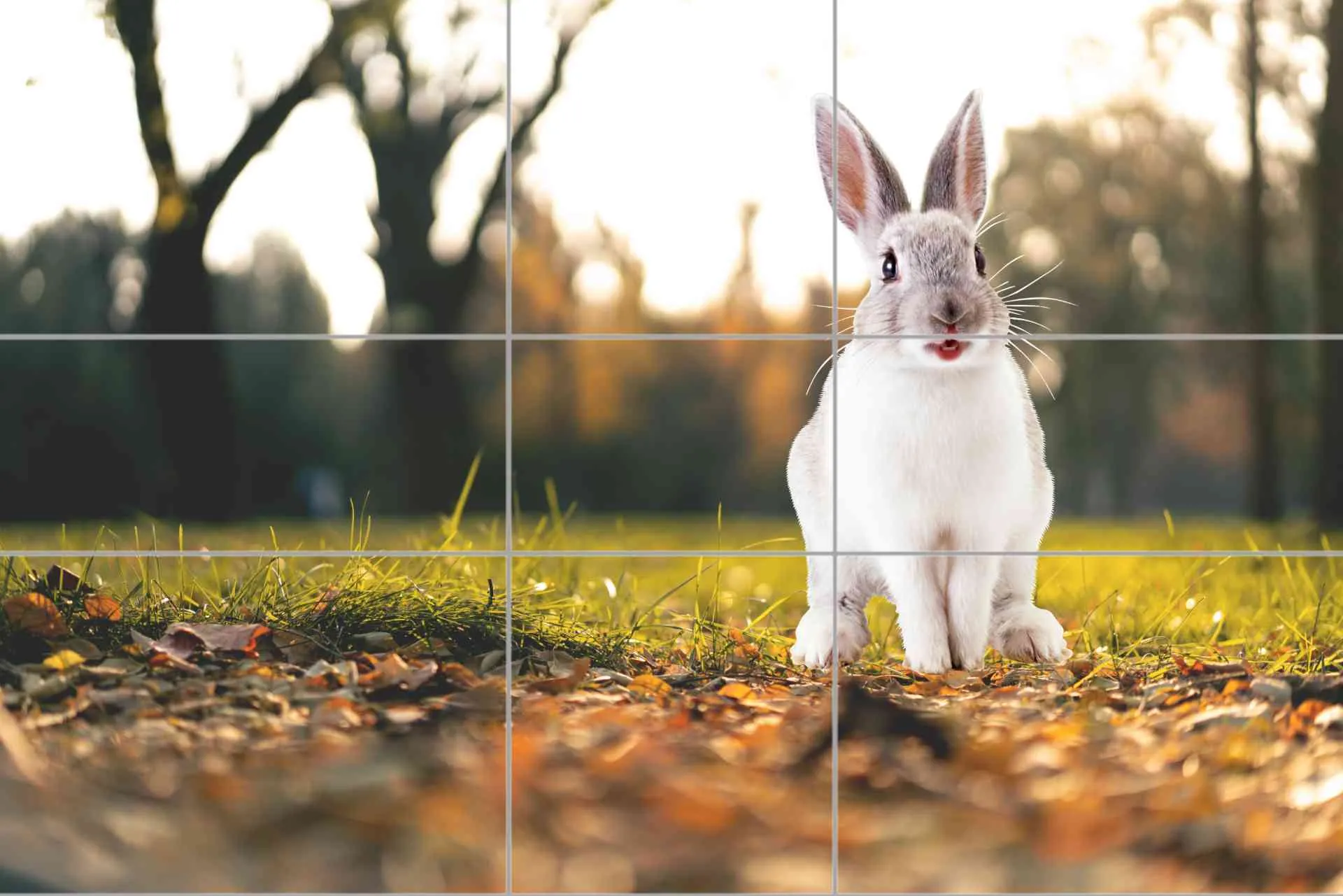
With the rule of thirds, you divide the image you want to photograph into nine equal areas by drawing two horizontal lines and two vertical lines. This can be imaginary, but many of the latest cameras have a so-called grid function you can use while shooting. The rule of thirds allows you to shoot an ordered image that feels more pleasing to the viewer. Moreover, the rule of thirds allows you to create more exciting and intriguing photos. Here's how:

Imagine you're in a forest, and a rabbit on the grass is what you want to capture with your camera. So, how can you best position the woodland creature in the photo?

gulden snede praktisch.jpg
gulden snede.jpg

As you can see, placing it in the centre of the image does not produce an interesting image. It's still a cute rabbit, but there are better ways to capture it. You'd be better off positioning the rabbit in one of the spots where the lines intersect. This will produce a more interesting, thought-provoking image. Plus, you can create an exceptionally ordered image by coinciding the lines that occur in the photo with the lines of the grid. In this photo, that's already been done fairly well. The bottom horizontal line coincides nicely with the line in the photo where the grass is in focus, and the left vertical line coincides nicely with the tree in the background.

Examples of the rule of thirds

In landscape photography, the rule of thirds creates enhanced tranquillity in the photo. The grass in this photo coincides with the bottom horizontal line, and the lines intersect where objects such as trees stand or where a mountain transitions into sky.

When photographing people or animals, you can take body contours into account. In this photo the bottom horizontal line coincides nicely with the longest part of the body. Also, the lines intersect exactly at one of the tiger's eyes. This trick draws attention to where you want it drawn to.

The golden ratio

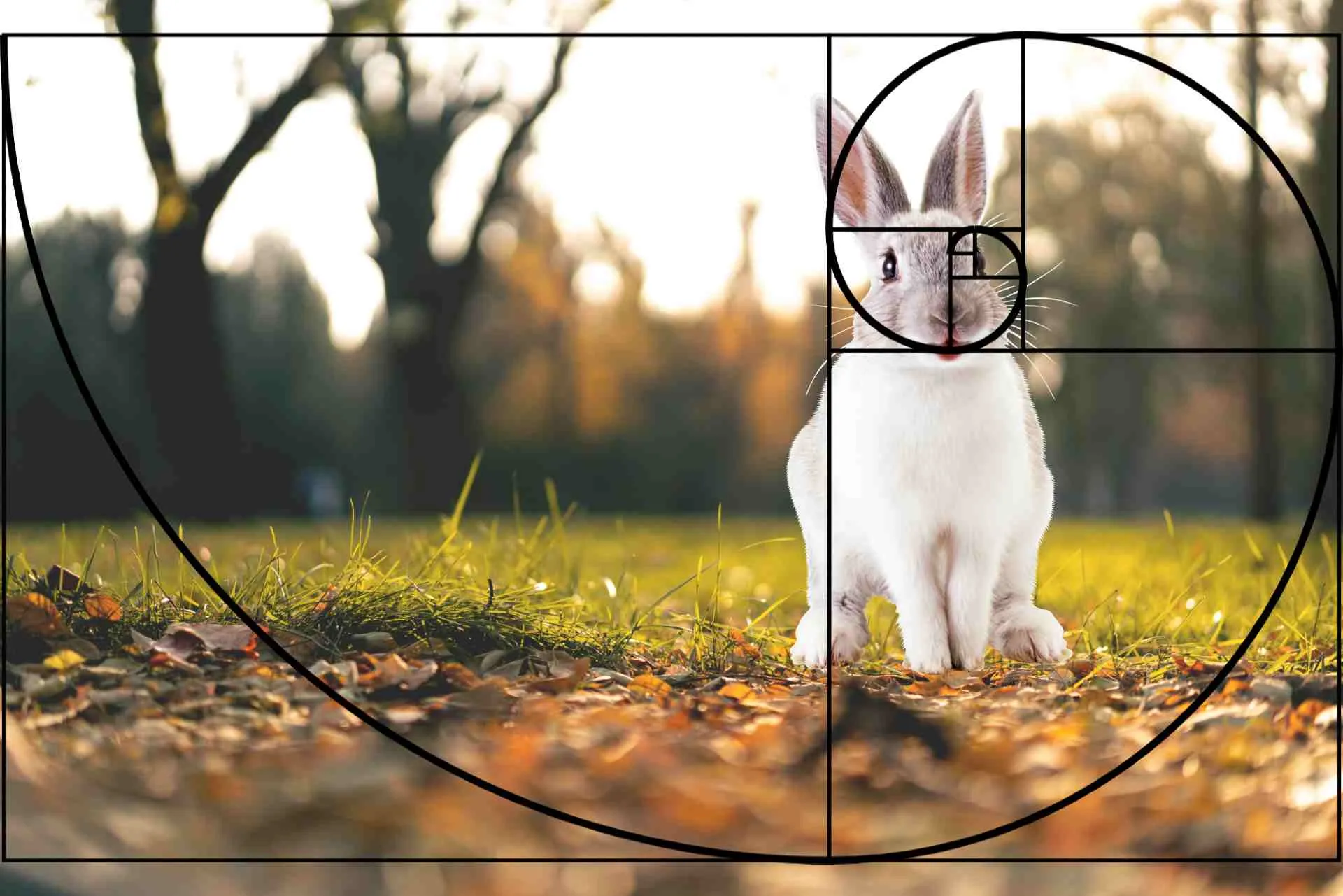
Another photographic rule is the golden ratio. The golden ratio is one that is regarded as perfection by many. Some even call it the Divina Proportia (divine ratio), probably because this ratio occurs prevalently in nature. The golden ratio is based on Fibonacci's mathematical sequence, but don't panic! You don't have to understand the maths behind the golden ratio to use it in photography. In photography, the golden ratio actually results in a slightly different grid that you can use for optimally intriguing photos. For instance, you can use Fibonacci's spiral, which is based on the golden ratio, to direct the viewer's attention.

gulden snede.jpg
gulden snede praktisch.jpg

The rabbit sits exactly on the right line as determined by the golden ratio and the spiral ends at its nose. Because the photo conforms to this natural ratio, you, the viewer, are more inclined to train your eye on the rabbit's head. However, Fibonacci's spiral is difficult to keep in mind while shooting. You can, therefore, also use a simplified version of the golden ratio. In doing so you can follow the same principles as with the rule of thirds, and have the lines in the photo coincide with the lines of the grid or position important objects where the lines intersect.

Examples of the golden ratio

The golden ratio is particularly useful when photographing certain events, such as the fire in this photo. Because this picture was taken in line with the golden ratio, it is easier for our eye to follow the action chronologically. We first look at the firefighter, but then focus on the jet of water trained on the fire.

The golden ratio also works really well in sports photography. However, sports photography involves speed, so it is easier to work with a simplified version. As you can see, the lines intersect exactly where the action takes place. Also, the bottom horizontal line coincides with the waves and the surfer's right leg roughly coincides with the top horizontal line.

Rules are meant to be broken

While the rules almost always ensure you can take a great photo, it isn't always the best to follow them. Sometimes you actually get a far more creative result when you deviate from it. So try the rules out to see how they work for you, but don't be afraid to break the rules either.

Composition in video

So, composition helps you create order in photos and to direct the viewer's attention. This is crucial in creating amazing photos, but also hugely important for videos too. Composition is indeed used to create highly intriguing shots in your favourite TV series and films. Take, for instance, films like The Grand Budapest Hotel (2014), which very cleverly plays with composition to create a certain aesthetic. Or the TV series Game of Thrones, where composition is used to tell the viewer more about a character. For example, powerful characters are often filmed from below to make them look bigger and more powerful, while conversely, submissive characters are filmed from above to make them appear smaller.

So, now you know the basics of composition. You can now play around with the rule of thirds or the golden ratio to create interesting, well-ordered photos and videos. But remember, don't forget to break the rules and have fun with your camera once in a while. That often yields the best photos, after all!

Read more

Looking for more inspiration or do you want to learn new things? Then check out our other articles.

prime-lens-afbeelding (1).jpg
WHAT IS A PRIME LENS?

Is a prime lens the right choice for you?

Photoshop.jpg
PHOTOSHOP EDITING

The possibilities of Photoshop are endless. Where to start?

scherptediepte1.jpg
DEPTH OF FIELD

Read all about one of the most used terms in photography: depth of field.