




Fisheye Lens
Thanks to the super wide angle of a fisheye lens, your creativity is stimulated and the possibilities with astounding distortions and effects are endless. Read more
90
Search results
Sort by:
Popularity
Popularity
Price low - high
Price high - low
["12420989","12330540","12571573","12571572","12571571","12571563","12172128","12212243","12544496","12578946","12578948","12578947","12578945","12578944","12578943","12578942","12442918","12436733"]
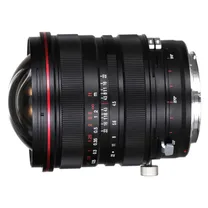
Laowa 15mm f/4.5R Zero-D Shift Lens - Leica L
On order
List price €1,529.00
€ 1,369. 90
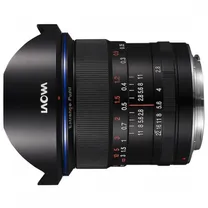
Laowa 12mm f/2.8 ZERO-D Lens for Nikon Z by Venus Optics
On order
List price €1,099.00
€ 1,024. 11
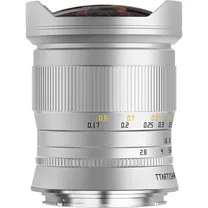
TTArtisan 11mm F/2.8 Canon RF - silver
Temporarily sold out
€ 299. 99
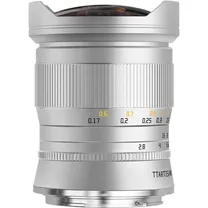
TTArtisan 11mm F/2.8 Nikon Z mount - silver
Temporarily sold out
€ 299. 99
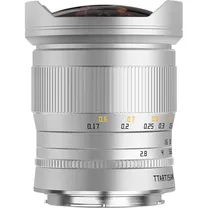
TTArtisan 11mm F/2.8 L-mount - silver
Temporarily sold out
€ 299. 99

TTArtisan 11mm F/2.8 Sony E-mount - silver
Temporarily sold out
€ 299. 99
 5 years warranty
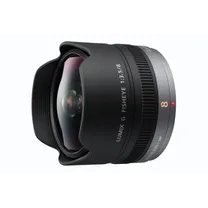
Panasonic Lumix G Fisheye 8mm F3.5
On order
€ 799. 00
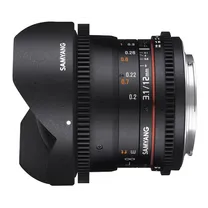
Samyang 12mm T3.1 VDSLR ED AS NCS fisheye Sony E-mount
On order
€ 579. 99
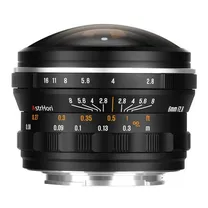
AstrHori 6mm f/2.8 Full-Frame Circular Fisheye Lens - Canon RF
Temporarily sold out
€ 299. 00
 5 years warranty
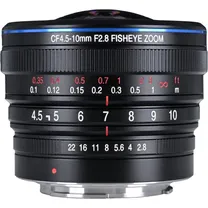
Laowa 4.5-10mm F/2.8 CF Zoom Fisheye EOS-M
On order
€ 479. 00
 5 years warranty
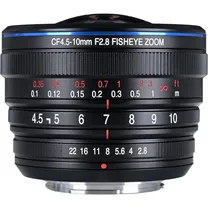
Laowa 4.5-10mm F/2.8 CF Zoom Fisheye MFT
On order
€ 478. 90
 5 years warranty
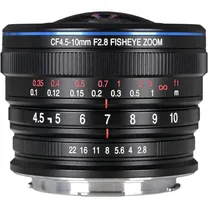
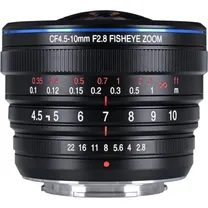
Laowa 4.5-10mm F/2.8 CF Zoom Fisheye L-mount
On order
€ 478. 90
 5 years warranty
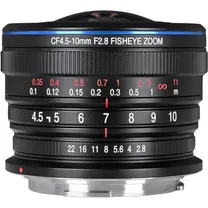
Laowa 4.5-10mm F/2.8 CF Zoom Fisheye Fuji X
On order
€ 478. 90
 5 years warranty
Laowa 4.5-10mm F/2.8 CF Zoom Fisheye Canon RF
On order
€ 478. 90
 5 years warranty
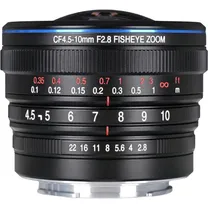
Laowa 4.5-10mm F/2.8 CF Zoom Fisheye Nikon Z
On order
€ 478. 90
 5 years warranty
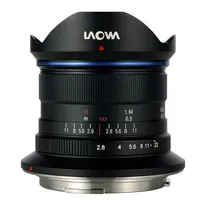
Laowa 4.5-10mm F/2.8 CF Zoom Fisheye Sony FE
On order
€ 478. 90
 5 years warranty
Laowa 9mm f/2.8 Zero-D Lens - Canon RF (LAO-09-CR)
On order
List price €549.00
€ 532. 90

AstrHori 12mm f/2.8 Fisheye Canon RF (Full Frame)
Temporarily sold out
€ 249. 00
Popularity
Price low - high
Price high - low
All about fisheye lenses
What is a fisheye lens?
A fisheye lens is a super wide-angle lens with a short focal length, which creates distortions due to the wide angle of view. Since the 1960s, this type of lens has been produced on a large scale for both consumer and scientific applications.
Distortion in perspective
The fisheye is known for its spherical lens, which ensures curves in the image field, as a result of which images with a very distorted picture are produced which differ completely from the reality. This distortion is useful when you want to record architecture, landscapes or means of transport in one image. For lenses with an image angle of 180 degrees or more, it is even possible to record the entire sky dome in one photo.
Despite the images looking strange, the fisheye lens corresponds with the perspective from the lens of the human eye. The only difference is that our field of vision is only limited to one angle of about 45 degrees and the reduced image of a fisheye lens therefore does not feel realistic. The advantage of this perspective is that the distortions give precisely the effect with which images become much warmer and a whole.
Varieties of fisheye lenses
There are two types of fisheye lenses, the circular lens and diagonal lens. The first fisheye lens that was developed is the circular lens. The lens is capable of projecting 180 degree images as a circle in the camera frame. The subjects are given a distorted image and are enveloped with a black surface. The typical well-known fisheye look.
With the diagonal fisheye lenses, the complete image is used to display the projection. This has the result that even more pixels are utilized, which results in less bulbous formation in the photos. This type of fisheye lens is effective for recording cityscapes, the interior of buildings and performances in concert halls.
Creative possibilities of the fisheye lenses
Since the fisheye lenses are very suitable for experimenting with, you can develop many creations endlessly. For instance, photographing animals and people from close by, whereby the front parts receive an enlarged effect on the smaller and smaller shapes towards the back. Another way of recording beautiful images is by combining buildings which already have curves with straight lines from surrounding buildings. When you want to capture a very wide composition, the fisheye lens can offer the solution, because it works with a larger image angle than the standard wide-angle lens.
Which brand will you choose?
Do you want a particular brand? We have several top brands: