




Reporter Flashes
A speedlight provides the desired lighting for your photo, so that objects are shown in greater detail and with more clarity. Thanks to their compact size and the hot shoe connection, you can easily attach speedlights to your camera, making them perfect for on-the-go shooting.
197
Search results
Sort by:
Popularity
Popularity
Price low - high
Price high - low
["12450200","12565677","12565676","12485361","12497807","12533424","12538431","12538174","12576143","12576142","12576141","12576140","12561339","103129","12537488","12570364","12450189"]

Godox Speedlite TT685 II Canon Lightshaper Kit
On order
List price €235.00
€ 199. 90
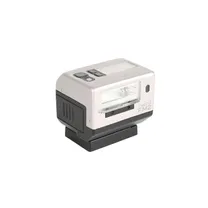
LightPix Labs FlashQ FM2 Manual Flash - Silver
Temporarily sold out
€ 95. 00

LightPix Labs FlashQ FM2 Manual Flash - Black
Temporarily sold out
€ 95. 00

Godox Retro Lux Cadet camera flash
On order
€ 119. 00

Godox Retro Lux Eleven Retro Camera Flash
On order
€ 79. 00

KEKS KF-01 Flash GN12 PC sync port silver
Temporarily sold out
€ 119. 90

Godox IT20 F Silver iFlash TTL Camera Flash for Fuji
On order
€ 59. 95

Godox IM22 i Flash Camera Flash White
On order
€ 39. 95
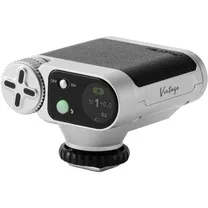
Viltrox Vintage Z1 flash Pro Fuji
On order
€ 68. 99
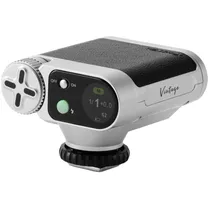
Viltrox Vintage Z1 Flash Pro Nikon
On order
€ 68. 99
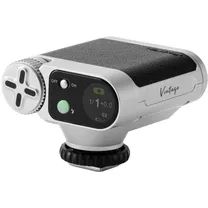
Viltrox Vintage Z1 Flash Pro Sony
On order
€ 68. 99

Viltrox Vintage Z1 Flash Pro Canon
On order
€ 68. 99

SmallRig 5818 RS20 mini Speedlite Flash, Silver
Temporarily sold out
€ 48. 90
 5 years warranty
Nikon SB-R1 Macro flash set (without SU-800)
On order
List price €619.00
€ 579. 00

Godox iM20 iFlash Camera Flash White
Temporarily sold out
List price €39.95
€ 29. 90

Viltrox Vintage Z2 Flash Nikon
On order
€ 34. 99

Godox Speedlite V860III Canon X2 Trigger Kit
In stock
List price €339.00
€ 273. 14
Popularity
Price low - high
Price high - low
What is a reporter flash?
A reporter flash, also called a speedlight, was especially developed for providing a subject with focused lighting. The first flashes around 1900 consisted of a simle but dangerous ignition technique, but since the 1980s the external flash has developed towards the current technology. The external flash is easy to attach to the top of your camera, so it can also communicate with the camera. This communication is important for realizing the ideal lighting, whether it is a recording during the falling darkness or portrait photography in a studio. The great advantage to a separate flash is that the right lighting can be achieved under the most varied conditions.
Working of a flash
Although the technology behind the flash is reasonably complex, we will try to give an impression of the way in which a flash works. The main function of a flash is to bring the lighting via a flash at the right moment. For this purpose, there must be communication between the camera and the flash. Because the flash only lasts for a fraction of a second (e.g. 1/2000s) and will have to be received by the camera in the recording. A camera therefore always has a minimum shutter speed in order to be able to make a recording in combination with a flash. This is often between 1/100 and 1/200. Because during the recording two shutter curtains move in front of the image sensor. The time between the first curtain and the second determines the shutter speed. The flash must therefore come in the part between the so-called curtains. Many modern cameras respond to this by synchronising the shutter speed with the capacity of the camera. Two flashes shortly after each other ensure that the subject is properly exposed. With advanced flashes, several flashes even follow each other, so that the lighting is exactly as desired. Because the pre-flashes ensure that the camera can calculate the right flash strength for recording the image. All of this is put into operation when you (half) press the shutter button. You can of course view the final photo and if desired you can alter the light incidence for taking another photo of the subject.
Functions of an external flash
An external flash has a number of functions which can considerably improve the result of the recording. With the tilt-rotate function you can ensure that light is reflected onto the subject via for instance a ceiling, wall or reflector. As a result, you can create a more natural image, whereby overexposure and the effect of red eyes are also prevented. Some flashes have the possibility of being operated remotely and wireless, so no disruptive vibrations occur. Of course, a tripod also offers the solution in many of these situations. Another function is an extendable bounce card, with which the light reflection can be changed. For a recording in a photo studio, outdoors in the sunlight as well as during the falling darkness, the reporter flash can also offer a solution.
Comparision with a built-in flash
Some cameras have a built-in flash, but this is often weak in strength and result. Only subjects at just a few metres can therefore be captured and are also still dependent on the surrounding light. Another disadvantage to the internal flash is that it is not titable and can therefore not be aimed from a certain angle at the object either. If you prefer not to invest in an expensive external flash, there are still enough affordable options which can offer a solution.
Extra accessories
As well as all the available parts which are supplied with a reporter flash (flash foot, charger, filters) there are also a few extras which can offer added value. There are for instance filters which can give an effect to the colour of the light, transceivers for indirectly controlling the flash or background cloths for changing the total recording.
What brand do you choose?
Do you want a particular brand? We have several top brands: