


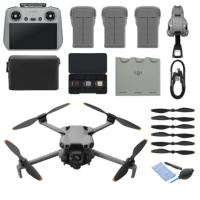


Polarisation Filter
For photos without reflections of water and glass and colourful images of nature and light, the polarisation filter offers the solution.
555
Search results
Sort by:
Popularity
Popularity
Price low - high
Price high - low
["12374127","12528016","12469242","12487576","12466867","12526617","12522457","12522570","12581335","12371384","12454930","12537459","12553188","12538916","12415264","12553175","12418683","1220747871"]

H&Y HD MRC Filter for holder 95mm ND8CPL
In stock
List price €189.00
€ 29. 00

Sigma Drop In WR Circular PL RCP-21TL FL-Mount
In stock
List price €229.00
€ 133. 51

PolarPro Helix - ND8/PL Filter - Burkard Series
In stock
List price €362.00
€ 196. 25

Kase K150P III Sony 12-24 F2.8 CPL Kit holder+CPL+bag
In stock
List price €399.00
€ 339. 73

B+W Pollarized Filter 46mm
In stock
List price €84.95
€ 57. 00

Kase Revolution PROF ND kit 46mm
In stock
List price €259.00
€ 169. 80

NiSi S6 TC CPL Kit for Nikon Z 14-24mm F2.8 S
On order
€ 419. 00

NiSi TC CPL 95mm
Temporarily sold out
List price €169.90
€ 165. 90
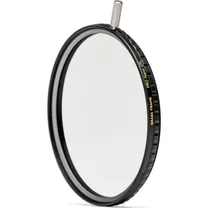
NiSi True Color Pro Nano CPL 82mm (Bass Frame)
Temporarily sold out
€ 140. 00

B+W Basic Circular polarization filter MRC 77mm
Temporarily sold out
€ 146. 00
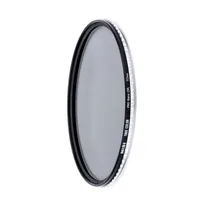
NiSi True Color Pro Nano CPL Filter 112mm
Temporarily sold out
List price €199.00
€ 179. 00

H&Y HD EVO ND3-1000 + CPL filter kit 67mm
Temporarily sold out
€ 108. 99

Kase 77mm ND + CPL + Black Mist variable 1.5-8 stop B270
Temporarily sold out
€ 149. 95
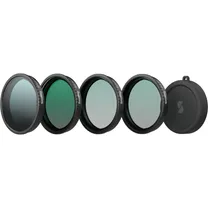
SmallRig 5412 Filter Kit for DJI Osmo Action 5 Pro / 4
Temporarily sold out
€ 67. 90

B+W Circular Polariser High Transmission MRC nano MASTER 77mm
Temporarily sold out
List price €288.00
€ 169. 00

Kase 49mm ND + CPL variable 1.5-8 stop B270
Temporarily sold out
€ 84. 95
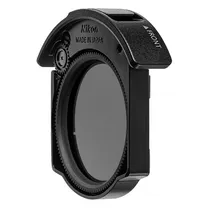
Nikon Circular Plug-In Polarization Filter C-PL460
Temporarily sold out
€ 399. 00

Hoya 46mm HDX CIR-PL
Temporarily sold out
€ 59. 95
Popularity
Price low - high
Price high - low
What does a polarisation filter do?
A polarisation filter is a type of filter that lets light through only if it has a specific direction. By allowing it only from a certain direction, colours in your photos can be made much sharper and the unwanted effect of reflections removed. In the past, with analog cameras use was still made of a linear polarisation filter, but with the arrival of the digital camera the circular polarisation filter is now used. The filter is built up from two rings: one for attaching to the camera via screw thread and a second one in order to determine the strength of the effect. Since not all the light is let through, you therefore also lose a part of the light. Fortunately, with a longer shutter speed, larger aperture or higher ISO value, you can adjust the lighting again.
Functioning of a polarisation filter
With the front ring of a polarisation filter, you can adjust the effect of the filter. It is important to know how the filter works. Light always has a direction, usually this is straight ahead. If light is reflected on for instance water or an object then the direction changes. The filter anticipates this by only allowing the light in from a particular direction. By altering the direction with the ring, the effect therefore also changes. For another camera angle, via the rotating ring, the functioning can easily be adjusted. In addition to all the functionalities, it also offers protection for the lens.
Use in the case of blue light
A frequently used possibility of setting to work with a polariation filter is while photographing blue light with potential cloudscapes. By applying the filter, the contrast in the light changes and the blue light is given a brighter and darker character, whilst clouds on the other hand become whiter. This change is the most effective when the camera is at an angle of 90 degrees from the sun, so the sun is to the left or right of the camera.
Effectiveness against reflections
Polarisation filters are effective against reflections on various objects. Because the filter can prevent the reflection by only allowing the light from a particular angle. This functionality is very welcome when you take a picture of a building with glass, objects under a glass plate and underwater life. In the water of a sea or lake, a reflection from the light often occurs, sometime this is really beautiful, but at other times you prefer to show what is happening under the water surface. By means of the filter, you can capture both fish and underwater plants. You get the best effect when you photograph from an angle of 45 degrees on the water surface.
Colourful nature images
Not only the application on water can make images much deeper and more intense, but also the application in wet nature areas. The jungle in which the leaves of trees and the ground surface are wet are given much more colour by the application of the filter. Pale green becomes bright and intense, and pale brown trees become darker. The use in wooded areas such as the tropical rain forest or mangrove gives colourful results.
When not to use
There are also situations and types of photography for which the use of a polarisation filter is less suitable. When you use a wide-angle lens, the effect of vignette (dark spots) is increased with the filter and so more spots occur. For recordings with a completely grey cloud cover, the effect is barely visible. On the other hand, in some situations, reflection is desired and it is not necessary to use the filter. It is useful to experiment with this and see what effect suits you better.
Choice for a filter
When you buy a filter, you should take into account that the shape fits with that of the lens or camera. Always consider for which lenses you will use the filter. With an adapter ring it is possible to mount a polarisation filter onto a lens with a different shape.B+W, Hoya and Rodenstock offer both high-quality filters in the higher price class and afforadable models for people with a lower budget.